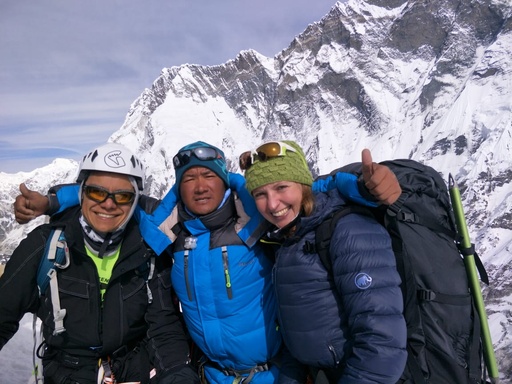
Island Peak Climbing


Itinerary
Your Journey, Step by Step
Day 2: Kathmandu to Lukla (2,800m/9,184ft) trek to Phakding (2,652m/8,700ft)- 30 min flight
Today, you will have an early breakfast at the Hotel. After breakfast, our guide will pick you up from the hotel. We will transfer you to the domestic airport by a private vehicle. From where you will have a flight to Lukla. You have around 35 mins of scenic flight to the Lukla Airport, the highest airport in Nepal. The alluring greenery surround of Lukla will mesmerize you. You will meet the rest of our crew members here. And after registering the entrance card at Lukla Tourism Checkpoint we begin our trek.
From Lukla, we head toward Phakding. We enter through Pasang
Lhamu Sherpa Memorial gate as our trek begins. The trail then drops down to
Thalsaroa and Cheplung. And you can have the spectacular vista of surging Dudh
Khoshi river on the way to Cheplung. Besides Cheplung, the trail crosses
through the suspension bridge over Thado Khola. It offers the view of Mt.
Khumbila before reaching at Ghat. Continuing to Phakding, we have inclined walk
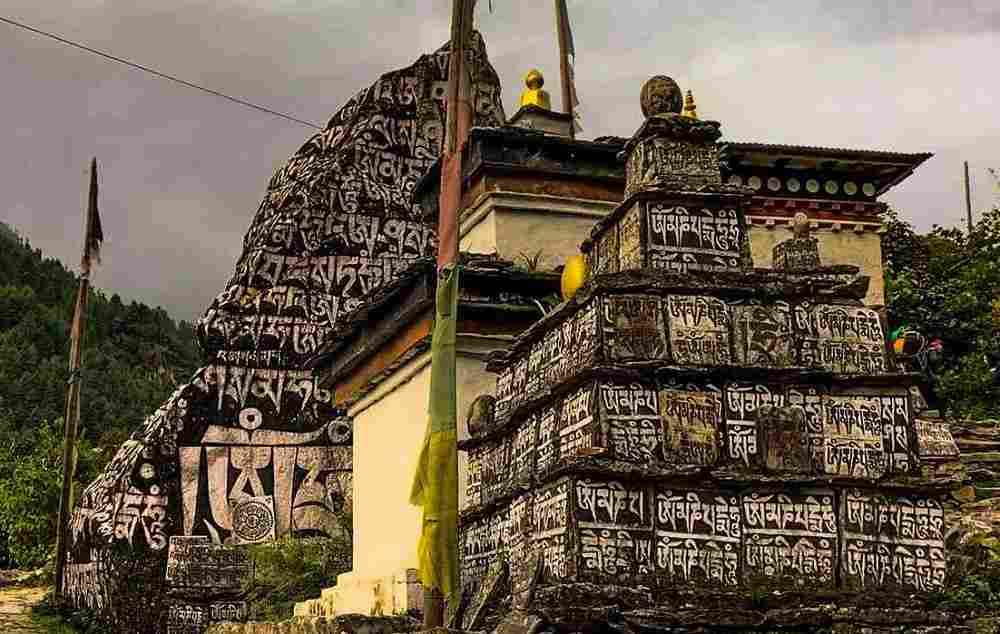
offering spectacular views. The demonstration of the prayer wheels, mantras
painted Mani stones & gompas are amazing. Phakding is a stopover while
trekking to the Everest region. Overnight stay at Phakding.
Day 3: Phakding to Namche Bazaar (3,440m/11,283ft)
Leaving Phakding, we follow the enchanting trail to Namche. It is going to be a long and tiring day trek today. Our trail follows the bank of Dudh Koshi River. It leads us to various Sherpa villages like Rimijung, Zamfute, Benkar, and Chhamuwa. This trek offers serene beauty in the Himalayan region. Reaching Chhamuwa, we register the entrance card. From here, we climb through the magnificent forest of rhododendron, fir & Mongolia trees. Next, we submit our entrance card and National Park entry card at Monjo. It is the border of Sagarmatha National.
From Monjo, we continue along the riverbed to the confluence of
the Bhote and Dudh Koshi Rivers. Then we have a steady climb, crossing the high
Tenzing-Hilary suspension bridge. Next, with a glimpse of the Mt. Everest and
the Nuptse-Lhotse, we ascent through pine forest that takes us to Namche
Bazaar. Overnight at Namche Bazaar.
Day 4: Acclimatization Day
This day is set as the first acclimatization day of our Island Peak Climbing. Before moving up to a higher elevation, we have acclimatized our bodies. So, we are acclimatizing in beautiful and famous Namche. Namche Bazaar, considered as the Gateway to Everest, is the biggest town along the Everest trail.
Today, we will first walk around Namche’s quaint villages. Then
we will head toward the Everest View Hotel. It is one of the highest placed
hotels in the world. Form here you get the panoramic view of Mt. Khumbila, Mt.
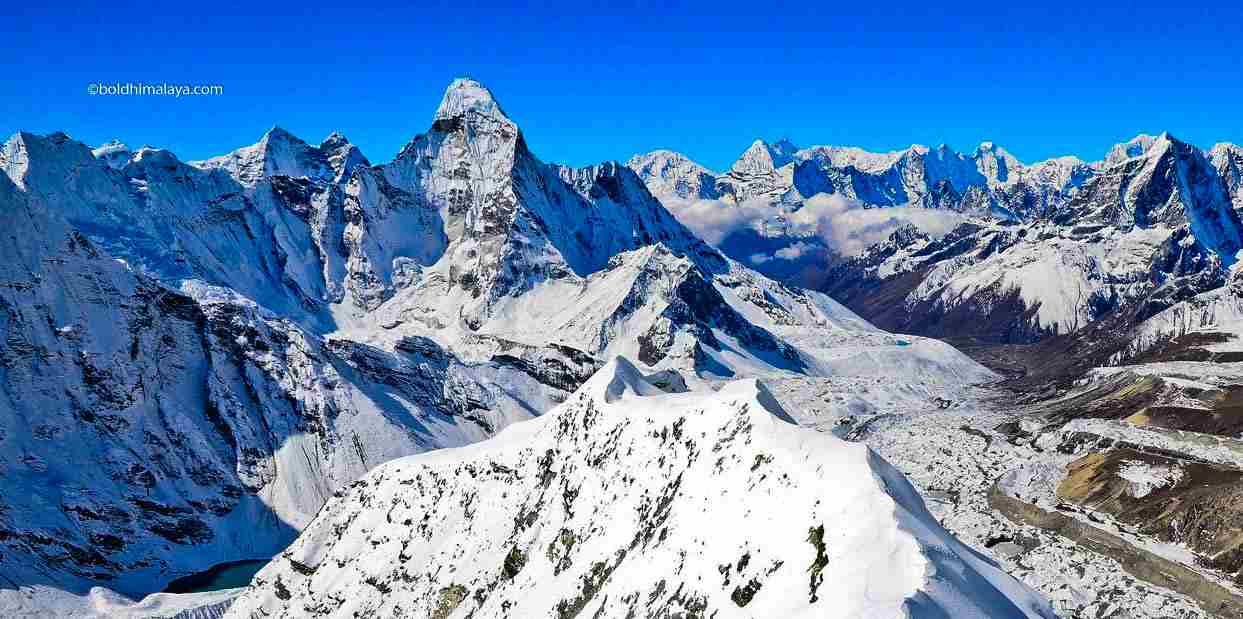
Thamserku, Lhotse, and Ama Dablam. Including the close-up view of the mighty
Mt. Everest. Likewise, we can hike to Syangboche airstrip. There you can enjoy
the breathtaking scenery of Namche village from the runway. After exploring
these beautiful places, we hike back to Namche have rest. Overnight at Namche
Bazaar.
Day 5: Namche Bazaar to Tengboche (3,870m/12,694ft)
After a delicious breakfast in Namche, today we head toward Tengboche. We trek along the rushing glacial water of the Dudh Koshi. While trekking you have a superb view of Mt. Everest, Nuptse, Lhotse, Ama Dablam. With the views of the mountains, our trail rises to Sanasa. From here the trail to the right descends to cross the Dudh Koshi on a suspension bridge near Phunki Thenga. Phunki Thenga is the lowest point north of Namche Bazaar.
We then enter the Imja Khola Valley. The trail from here rises
steeply and through the rhododendron forest. And the trail takes us to the
hilltop village of Tengboche. Overnight at Tengboche.
Day 6: Tengboche to Dingboche (4,400 m/14,435 ft)imj
With the beautiful morning, we walk to the monastery in Tengboche. The monastery is in a perfect location to enjoy the alluring Himalayan landscape. After visiting the monastery, we begin our trek to Dingboche. We walk through a lush forest of birch, conifers, and rhododendron first. It will an easy path to walk. Then the trail dips down to Debuche crossing the Imja River. On the way, we climb up to the Pangboche. With the pristine view of the Himalayas, we follow the upper Pangboche trail. Here, we visit the Pangboche monastery.
Leaving Pangboche, we walk on a moderate trail and enter Imja
Valley. You can see the valley has a gradual unfold as we approach the
confluence of the Lobuche River. We then descend into the river and start the
climb up to Dingboche. As the beautiful array of fields enclosed by stone walls
greet as we reach Dingboche. These stone walls protect barley, buckwheat, and
potatoes from the cold wind and grazing animals.
Dingboche is a summer settlement surrounded by great peaks. Ama
Dablam, the ridge of Nuptse- Lhotse, Tawache, and Cholatse surrounds Dingboche.
Overnight at Dingboche.
Day 7: Dingboche to Chhukung (4,730m/15,518ft)
After breakfast in Dingboche, we begin our trek to Chhukung. We trek through stone-walled fields, Imja Valley. Then we walk in glacier moraines. While walking, we will be surrounded by Lhotse and Ama Dablam mountains. Continuing our trek, we reach Bibre village. Here you can see Island Peak soaring above us. We follow the trail that is intersected by the icy stream. We reach Chhukung. Chhukung is a small charming settlement. And directly across the Chhukung valley is the fantastic Ama Dablam and the Amphu Labsa mountain. Overnight at Chhukung.
Day 8: Acclimatization: Climb Chhukung Ri (5,546m) and trek back to Chhukung
It’s a day for another acclimatization. As the altitude is increasing day by day and we are coming closer to Island peak. We need to acclimatized our bodies. And for acclimatizing the body we will climb Chhukung Ri today. Chhukung is located above the Chhukung village. And climbing this peak will help our body to adjust to the high altitude. Moreover, the panorama from the top is breathtaking. You will have an amazing view of Ama Dablam and Amphu Labsa peak from here. After making it to Chhukung Ri we get back to Chhukung valley and have rest. Overnight at Chhukung
Day 9: Chhukung to Island Peak base camp (5,200m/17,060ft)
Today we are going to the Base Camp of Island Peak. The trail to the base camp has equal steepness. From Chhukung, we climb south first then turn east to the main line of the valley. Then we walk on a winding path below the southern flank of the moraine from the Lhotse Glacier. After that, our trek continues on a pleasant trail a stream-side. And following a crisscross route through the Imja and Lhotse glacier moraines. And we reach a wide flanking the southwestern side of Island Peak. Overnight at Island Base Camp
Day 10: Pre-climb training on Island Peak Base Camp
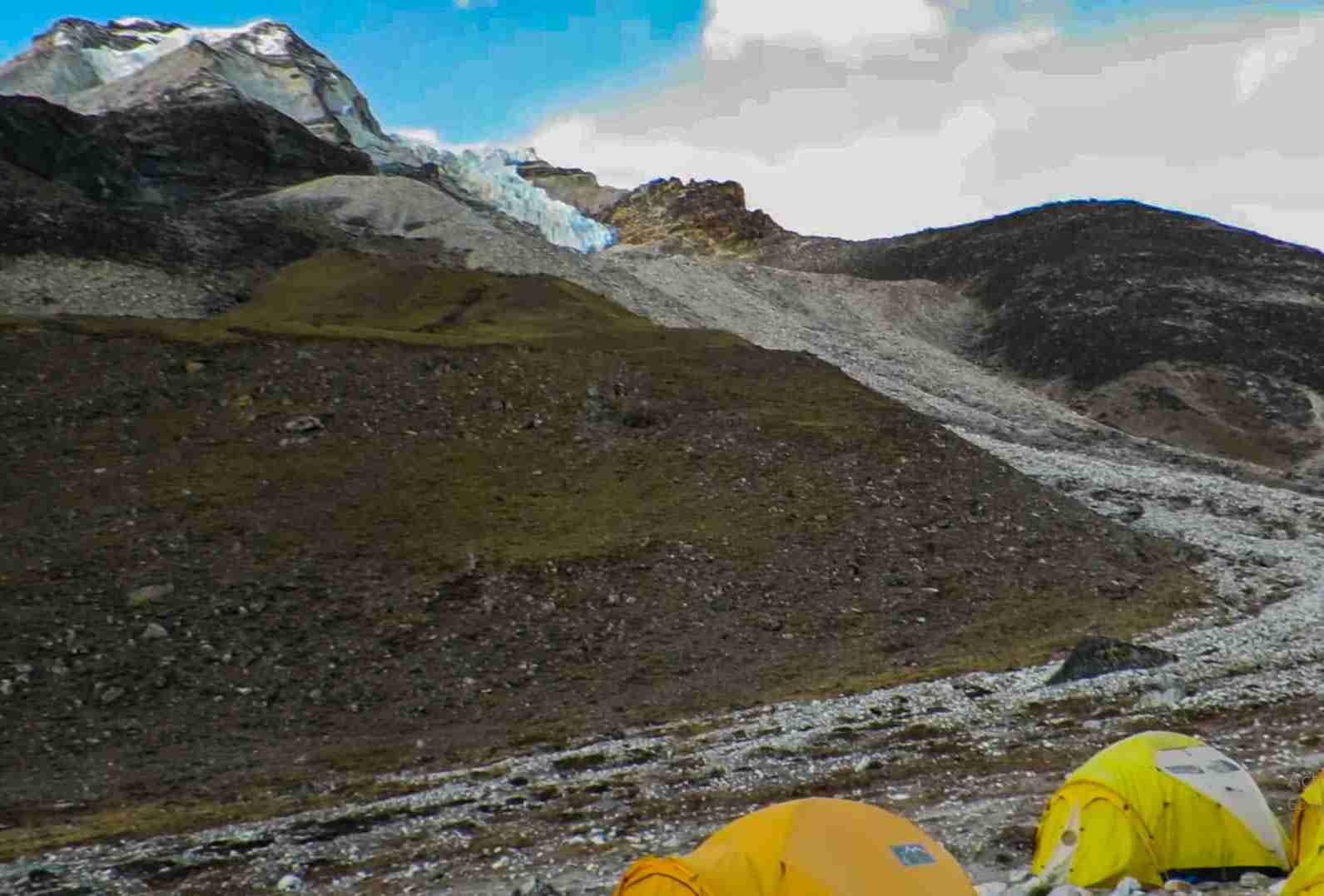
We will spend a day at Island Peak Base Camp. Here, we will have pre climbing training after breakfast. Our guides will provide training on peak climbing methods. And teach you the appropriate ways of using the climbing gear. Ice axes, harness, ascender, climbing boots, and crampons, etc. are the climbing gears. Today’s training will also include how to do up and down using ropes. It is not compulsory to have preceding training for Island Peak Climbing. But, some training experience will boost up your confidence and climbing skills. We keep climbing stuff in order after preparation. And we get ready for tomorrow climb to Island Peak. Overnight at Island tented camp.
Day 11: Island Peak base camp to Island Peak summit (6,189m/20,305ft), back to base camp
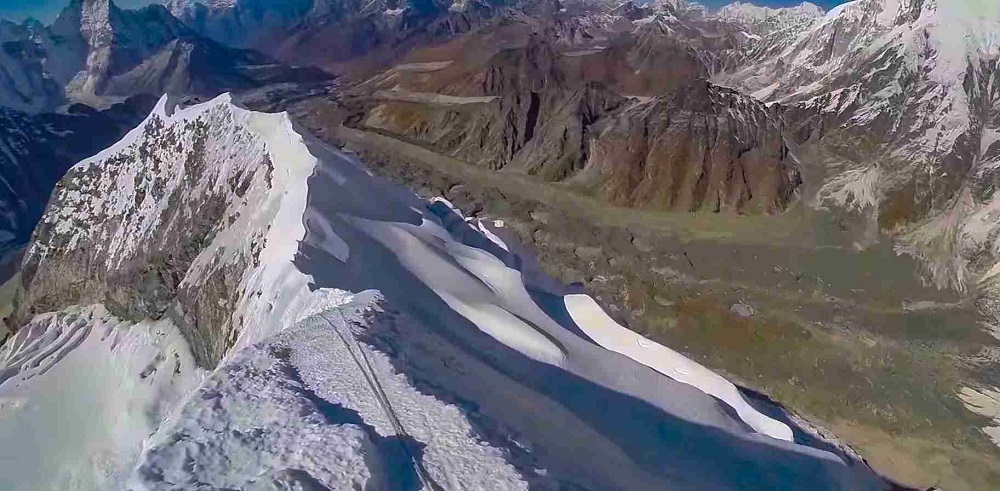
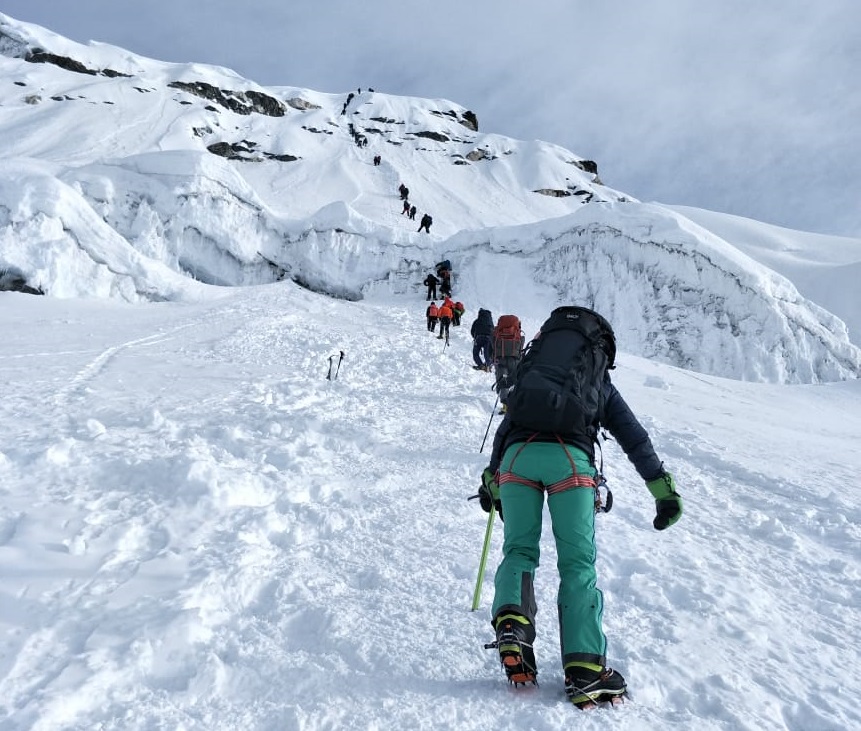
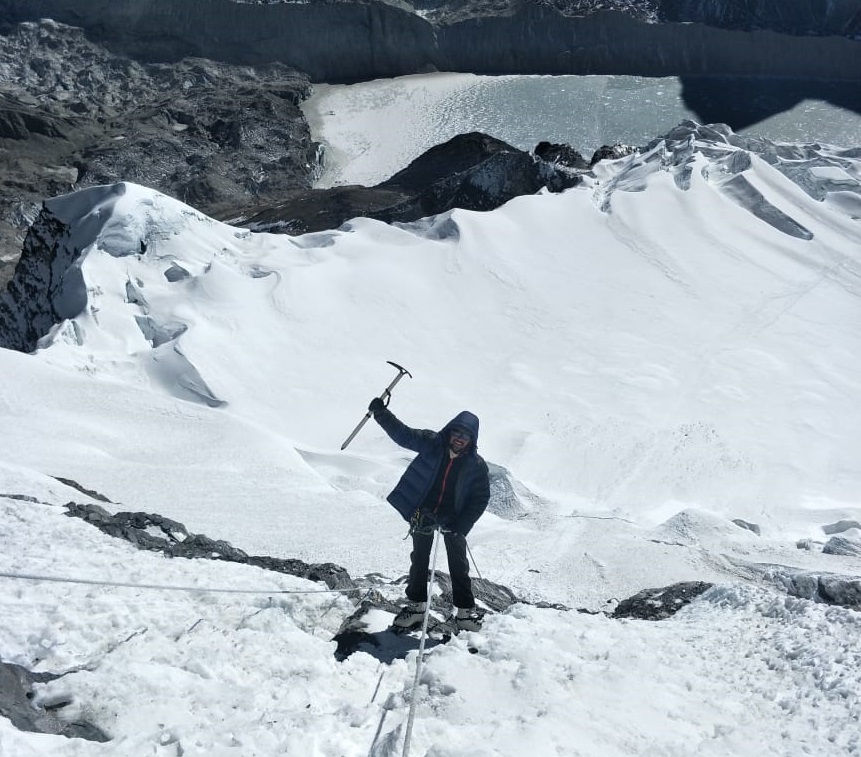
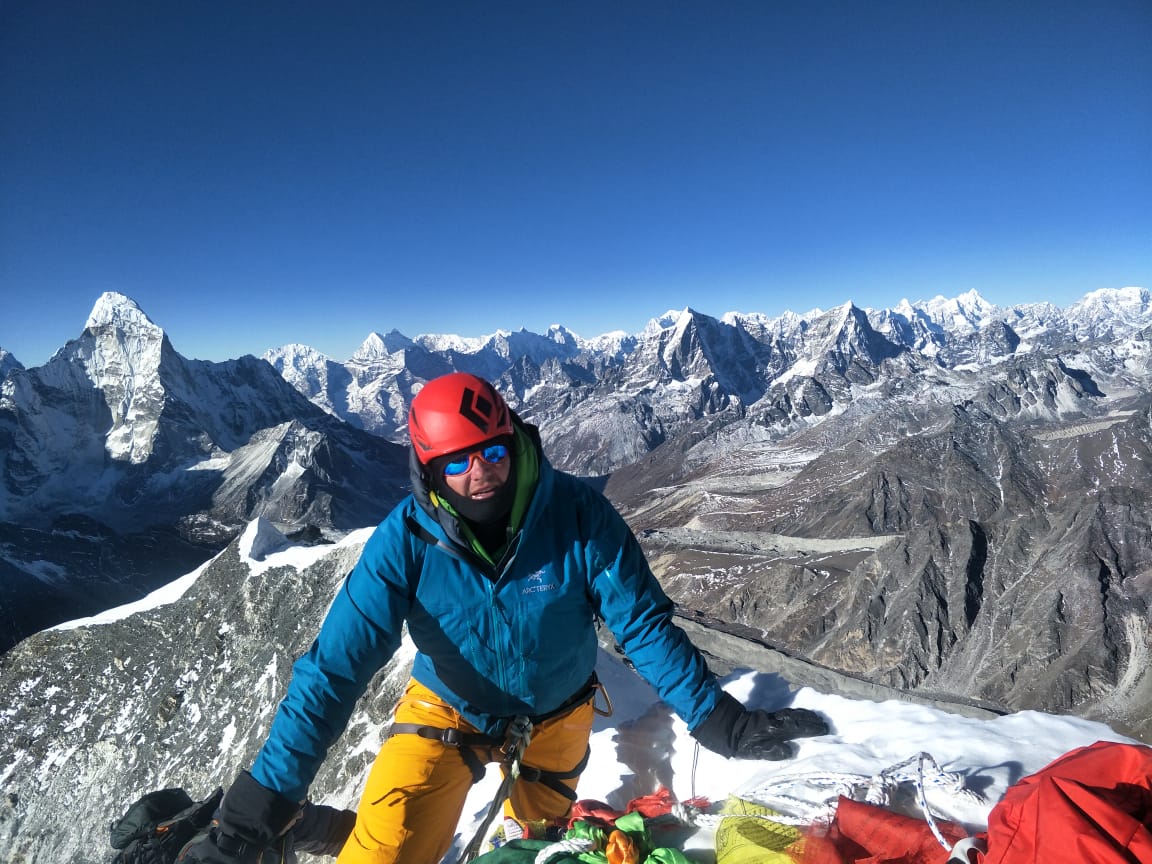
It is the most awaited day of our trek. As we are going to climb Island today. We have to begin our climb early in the morning, around 1 AM after breakfast. With the beginning of the trek, the trail moves up beyond the base camp for several hundred meters and strike off the steep hillside. Before becoming boulder strewn the path turns to grass. And we will see the narrow slope as we climb up the hill and the trail enters a steep rock channel. After that, we climb the rock gully. And following a ridgeline leading to an exhilarating and exposed traverse onto the snout of the summit glacier. Our guide will fix a rope when required and a steep snow slope leads us on to the summit glacier. Moreover, for safety during the climb, both fixed rope and man rope are used. After passing all the challenges we reach the summit of Island Peak. You will have an amazing panorama here. The view from the summit will mesmerize you.
After enjoying the summit views, we descend back to Island Base
Camp. Overnight in tented camp.
Day 12: Island Peak Base Camp to Pangboche (3,985m/13,074ft)
After a wonderful upward journey to the Island peak, from today we are trekking downward. We descend to Pangboche from Base camp after breakfast. It will be much easier as we are descending to lower altitudes. We pass through the wide valley of Khumbu Khola. Following the same route, we cross beautiful Sherpa villages, Orsho, and Shomare on the way. Continuing the trek, we reach Pangboche village. It is a scenic village surrounded by Mt. Everest to its north, Ama Dablam, Thamserku and Kangtega to the east, the Kongde range to the south. Moreover, the Imja Tse river flows through the wide fertile valley.
Day 13: Pangboche to Namche Bazaar (3,440m/11,286ft)
Leaving Pangboche, we retrace our steps down to the Imja Khola and up through the forest to Tengboche. From Tengboche, we continue our trek through the hillside. This hillside is blanketed by rhododendron and juniper trees. Then we cross the bridge over the Dudh Koshi River. We follow the trail of Dudh Khoshi gorge that descends through the pine forest and we arrive Sanasa. After Sanasa, we pass through the forest. We look out for wildlife like mountains goats, colourful pheasant, snow leopard, etc. on the way. And passing through a Chortens, we reach to beautiful Namche bazaar. Overnight at Namche Bazaar.
Day 14: Namche Bazaar to Lukla (2,850m/9,350ft)
We will have a delicious breakfast Namche. Then we will trek back to Lukla. From Namche, we will descend crossing several suspension bridges. We further trek to Dudh Koshi River to Phakding. Then a gradual walk from Phakding takes us to Cheplung. And after ascending we reach Lukla. You can see prayer flags, Chortens, Mani walls & miniature Gompas lined throughout the village. Overnight at Lukla
Day 15: Lukla to Kathmandu Flight
After breakfast at Lukla, we will say a final goodbye to the Everest region. We memorize the journey before leaving. Today, you will have another thrilling flight back to Kathmandu. You will take one last close look at the mountains during this flight. On reaching Kathmandu you will be transferred to your hotel
You can have some rest first then wander around nearby areas.
Later in the evening, you will have a cultural dinner with Bold Himalaya. It’s
farewell dinner to celebrate the successful climb to the summit. Overnight at
Kathmandu.
Day 16: Final Departure or Join Next Program
Here comes the last day of your trip. Today, you are returning to your home town. Our representative will drop you to the airport 3 hours before your scheduled flight. Or if have a long vacation and you are staying in Nepal for more time, we can arrange another awesome trip- if you are interested.
Want to customize your trip?
We ensure every trip meets your expectations — customize your itinerary anytime to match your travel style and preferences.

Inclusions
What’s Covered in Your Adventure
- All ground transportation during the trip as per the itinerary
- Four-star hotel accommodation in Kathmandu on a twin-sharing basis on BB (Bed and Breakfast) plan.
- Best available trekking lodge during trek & tented camp in high camp before Island climbing
- Three meals in a day (Breakfasts, Lunch, and Dinners with tea or coffee) during the trek and climbing period.
- All camping equipment in Base camp.
- All climbing equipment
- Sagarmatha National Park entry permit
- Experienced Climbing Sherpa climbing guide during the trek & Climbing including their food accommodation salary insurance
- Porter (2guest: 1 Porter) including their food accommodation salary insurance
- TIMS card (Trekking Information Management System) Permit.
- Group medical supplies (First Aid medical kit will be available).
- One tent will be available in the Base camp for 2 people on a shared basis.
- High altitude food and all climbing crew will be available above base camp.
- Necessary fixed and dynamic ropes will be available during the climbing period.
- A necessary kitchen crew will be available in the base camp.
- Complete pre-departure information, flight ticket reconfirmation, and extend visa service(if necessary).c
- Farewell Dinner in Kathmandu before departure.
- All necessary paper works, office Service charges,s, and Government & local taxes.
- Extra Breakfast, Lunch in the Kathmandu
- Dessert & Bar Bills
- Your international air ticket & travel insurance
- Tips for the trekking, climbing crew members
Good to Know
Your Journey, Step by Step
Is Island Peak hard to climb?
Island Peak Climbing presents a challenge. Is ideal, for those who love trekking and want to venture into mountain climbing. The journey typically spans 14 to 19 days with one or two days dedicated solely to climbing. Each day involves trekking across hills and rugged terrains for an average of 4 to 6 hours. The expedition includes navigating glaciers, rivers challenging terrain and mountain passes. On the summit day expect a strenuous climb lasting 12 to 13 hours over a distance of 10 miles. Our team offers climb training ensuring even climbers new, to high-altitude treks can participate confidently.
During the Island Peak Climb, the peak altitude you will reach is 6189 meters, above sea level at the top of Island Peak. Additionally, you will spend nights above 3,000 meters in elevation increasing the risk of experiencing Altitude Sickness symptoms. Therefore it is important to take precautions such, as acclimatization staying hydrated ensuring rest, and so on.
Make sure to read Things to Know before going trekking in the Himalayas of Nepal
Preparation for the Island Peak Climb
Climbing Island Peak is no mountain ascent. It calls for a training program tailored to its challenges. The peak features sections that demand mountaineering expertise including skills, like abseiling and ladder crossings. To tackle the climb successfully one must be well prepared for these aspects. At an altitude of 6,150m there is a segment where descending the headwall requires using a figure eight device, for abseiling or rappelling.
The trek, to the peak of Island Peak typically takes between 12 to 16 hours depending on the conditions. It’s crucial to concentrate on your strength and endurance during this journey. The adventure doesn’t end there as you’ll also need to trek to Lukla once you’ve reached the summit. Your readiness for the ascent will largely depend on your fitness and prior climbing experience.
While climbing Island Peak without experience is possible it’s essential to undergo training beforehand. Familiarize yourself with ropes, Jumar ascenders, and abseiling techniques using a figure of 8 k, not on fixed lines. Physical conditioning focusing on building both strength and endurance is key, for a climb.
Also, Make sure to read Tips and Advice for Perfect Trekking in Nepal
Acclimatization & Prepare Before Climbing Peak
Our itinerary includes strategic acclimatization periods to ensure successful Island trekking peak climbing. You’ll spend 2 days acclimatizing in Namche and Chhuking, where you’ll climb Chhuking Ri (5,546m) for enhanced acclimatization and prepare for the climbing days before advancing to the peak.
At the base camp, our experienced climbing team will provide comprehensive training on the technical aspects of climbing, including climbing techniques, safety precautions, and proper use of gear. The following day, you’ll embark on the climb fully prepared and equipped.
Climbing Guide to Climber Ratio
For up to 2 climbers, one climbing guide will be provided. For groups exceeding 2 climbers, an additional guide will be assigned for every 2 climbers to ensure a successful climb. For instance, if there are 3 climbers, there will be 1 climbing guide and 1 assistant guide, forming a supportive team to facilitate the climb.
Acclimatization
Altitude sickness is a concern, for hikers. It can be effectively managed with prompt care. Fortunately, there are steps you can take to prevent altitude sickness. Our travel plan is carefully crafted to allow for an ascent giving your body time to acclimate to the changing altitude.
During the Island Peak Climbing expedition we will spend time adjusting in Namche Bazaar and Chuukung. In Namche you’ll have the chance to explore this Sherpa town while getting used to the altitude. Additionally, we will acclimatize at the Island Peak Base Camp, where we’ll trek up the ridge for views of peaks.
Throughout the journey you’ll have plenty of opportunities to rest and recuperate. On your days you can focus on rejuvenating yourself by resting, enjoying meals and drinks reading, unwinding with music or leisurely exploring the surroundings. Our experienced trek leaders are , well-equipped to handle altitudes and have undergone training in wilderness first aid. Your well being is our priority.
In case someone experiences altitude sickness immediate descent is crucial for recovery. In instances your trek leader will assess the situation. Make a decision, on whether to continue the trek or descend promptly based on the teams overall condition.
Available Facilities during this Tour Drinking Water during the Island Peak Climbing
When hiking for, more than 4 to 5 hours daily in regions it’s important to stay hydrated by drinking plenty of water. Dehydration is common at altitudes so increasing your fluid intake is essential. While bottled water is an option it can be expensive at locations. To save money consider carrying a filtration bottle or purification tablets along with a water bottle to refill at springs and taps along the trail. Tea shops also offer boiled water for a cost, per liter or pot if needed.
Communication during the trip
During the Island Peak Climbing Trek, you’ll have access, to internet services at the lodges for a fee. At these lodges you can reach out to your loved ones; however, once we ascend to elevations we rely on phones for safe communication. Our trek guide will connect with all team members daily to ensure a journey. If needed our main office is reachable, for assistance. While you can consider purchasing a SIM card in Kathmandu keep in mind that mobile signals may weaken at altitudes.
Free Airport Transfer
When you are new to a country it can be quite challenging to navigate the places. We understand this problem so we have arranged a receiving team for you during your arrival at the Tribhuwan International Airport. You will be properly greeted and be transferred to your hotel. The transfer to the airport service is also available during your departure from Nepal and this service is included in the trip cost.
Island Peak Climb Permits
You will need to acquire the following permits before starting to climb Island Peak.
NMA (Nepal Mountaineering Association) Permit
Sagarmatha National Park Entry Permit
Local Area Permit (Khumbu Rural Municipality Entrance permit)
Island peak climbing permit cost
You will not need to pay the permit cost once you pay us the tour cost. The permit cost is included in the trip package. But for information well-being,team’spurposes below listed are the cost for the permits.
The fee, for a climbing permit can vary between $70 and $250, per individual depending on the season. This permit is issued by the NMA. Additionally, the Local Area Permit required for trekking costs $50.
| Numbers of Climber | Price Per Climbers in USD |
| 1 | 2150 |
| 2 | 1950 |
| 3 | 1875 |
| 4 | 1800 |
| 5 | 1700 |
Insurance Requirements
This particular trek is quite challenging, due to the risks associated with high-altitude hiking, potential altitude sickness, and unexpected weather changes. Travel insurance is mandatory for those embarking on the Island Peak Climbing expedition. Prior to commencing the trek all hikers must provide us with a copy of their travel insurance policy certificate. The policy should include coverage for emergencies, emergency repatriation, helicopter rescu, and evacuation costs at altitudes (up to 6000m).
While we can suggest insurance providers to assist you please note that we do not directly sell insurance policies. Kindly forward us a copy of your insurance policy certificate within a week of confirming your booking, for the Island Peak Climb. Once you have booked the trekking adventure we kindly ask all participants to share their insurance details with us. In case of emergencies we will utilize your insurance policy and any other relevant documents you have provided us for rescue operations and transfers to facilities.
Passport and visa Info
Foreigners ,,,,except Indians need a visa to visit Nepal. However most nationals can obtain a visa upon arrival, at Tribhuvan International Airport and other border checkpoints in Nepal. To apply for a visa you will need a passport for least six months a 30-day,passport-sized photo and the applicable visa fees. The current fee stands at USD 50 for a 30 day stay. Chinese citizens and those from countries (Bangladesh, Bhutan, Pakistan Maldives Sri Lanka) are eligible for visas with certain restrictions. Additionally children, under the age of 10 are granted visas.
People hailing from Nigeria, Ghana, Zimbabwe, Swaziland, Cameroon, Somalia, Liberia, Ethiopia, Iraq, Palestine and Afghanistan might not be eligible, for a visa upon arrival. Therefore individuals from these nations will need to reach out to the embassy in their area. It’s important to note that visa regulations in Nepal are subject to change, without advance notice. To stay updated on the visa details kindly visit https;//www.immigration.gov.np/
What you gonna explore in this package
Packing List
Clothes
Sun hat or scarf
Winter hat insulating hat or Wide-brimmed hat
Sunscreen
Sunglass with UV protection
Hiking shirts
Long-sleeved shirt
Hooded rain jacket
Fleece jacket
Lightweight cotton pants
Heavyweight winter gloves
Expedition grade down jacket
Sweater
Polar fleece trousers or similar mid-layer trousers
Goose-down trousers or bibs. Or a down suit
Use waterproof stuff sacks to keep your clothes dry.
Footwear
Hiking Boots
Thick wool socks (Take an extra pair of thick light socks)
Gears
Backpack or daypack (Size depends on whether you take a porter or not).
Thermal bottle
Water purification
Trekking pole
Sleeping bag (-15 bag is best in the high altitude trekking)
Toiletries
Medium-size drying towel
Toothbrush
Toothpaste
Biodegradable bar soap
Our Team leading the climb
During the Island Peak Climb, our team of guides and Sherpas who are licensed, trained and highly experienced will be there to ensure your journey is comfortable and unforgettable. Each group of two trekkers will have a designated porter with a luggage weight limit of 18 kg to avoid overloading.
Our crew consists of individuals, from the Himalayas who are well-adapted to the regions challenges. We value our staff members greatly providing them with compensation and covering their insurance, clothing, meals and accommodation during the expedition. They receive attention promptly if they fall ill or get injured.
How safe is this Trail?
We ensure the safety, security and satisfaction of our clients with safety being our priority. We will have all the gear, equipment and first aid kits, for the journey. Additionally, we provide top notch equipment in the market. Our leaders and guides have recei,,ved first-aid training.
You will be accompanied by a Sherpa guide who has successfully summited Island Peak times. The Island Base Camp includes a doctor as part of the team. In case a participant falls ill due to altitude sickness it will be, at the discretion of the trek leader whether to continue or descend immediately. We will trek together for the safety of the group.
What happens during an Emergency?
The Himalayan Rescue Center can be found in Pheriche, a distance, below Chukkung. In Netop-notchpal helicopter evacuations are commonly used for emergencies. There is a established system, for managing logistics. It’s crucial to have travel insurance and communicate your destination and activities clearly to the insurance provider. In case of an emergency the team, including guides, porters and other nearby individuals will initially handle the task of moving a casualty.
The objective is to move the injured person to a location and then to a spot where they can be evacuated. On a summit this might involve covering some distance and taking some time. Typically we don’t carry satellite phones nowadays due, to the use of phones. Howeverdistance is, there may be instances where walking a distance’s necessary to reach a shelter with phone connectivity.
When dealing with altitude sickness it’s advisable not to take risks and descend. Going higher could quickly lead to conditions like cerebral or pulmonary edema, which can render you incapacitated. Therefore if you’re feeling unwell it’s usually best to descend while you still have mobility. Although emergencies are rare in the supported region of Nepal where Island Peak is located rest assured that all necessary facilities will be available, in case of any crisis.
Island Peak Climbing Cost
This trip costs Rs, 1890 USD. The trip consists of climbing permits, transportation, base camp accommodations, sherpa guides etc. For more detailed information about what’s included in the trip package check out the include/exclude section of this page.
Everest base camp trek with island peak climbing
This is an incredible combination of two distinct adventures in a single package where you will experience mountain climbing as well as reach the base camp of the world -famous Mount Everest.
What you gonna explore in this package
Embark on a 5-day journey through the enchanting island of Bali, where vibrant
culture,
stunning landscapes, and rich traditions await. From the bustling streets of Ubud to
the
serene beauty of rice terraces, this tour offers a perfect blend of adventure and
relaxation. Explore iconic temple.
FAQs
Your Questions, Answered
Should I pack my medications for the Island Peak trek?
If you have any allergies, to medicines it’s best to check with your doctor. You can usually find medications in Kathmandu.
I tend to experience altitude sickness. Is there a way to prevent it?
While its not possible to avoid altitude sickness there are ways to reduce its risks. Proper acclimatization, staying hydrated and taking an ascent are essential, in preventing altitude sickness. It’s important to follow your guide’s recommendations maintain a pace and pay attention to your bodys signals. Our guides will also provide you with tips during the climb.
How can I go about booking and making payments for Island Peak Climbing?
To book the trek you can visit our website. Reach out to us directly. We require a payment of 10 percent of the trip cost to confirm your booking. Payment methods accepted include bank transfers, credit cards, Wise or Western Union. The remaining balance will be due upon your arrival in Kathmandu.
Is it necessary to have travel insurance, for climbing Island Peak?
Yes all trekkers and climbers are required to have travel insurance. It’s important to make sure that your insurance policy includes coverage, for high altitude trekking and climbing as helicopter medical evacuation.
What is the weight limit for luggage that a porter can carry?
We assign one porter for every two trekkers with a luggage allowance of 18 kgs (9 kgs, per trekker). Porters not transport your gear. Also provide motivation for you to conquer new heights. Your kindness and generosity serve as inspiration for them to work diligently towards ensuring your journey.
Does the company offer an airport pick up service?
Upon your arrival at Tribhuvan International Airport, a representative from Boldhimalaya will be waiting for you outside the arrival lounge holding a sign with your name, on it. They will then escort you to your chosen hotel in a vehicle.
What are the accommodations, like for stays on the trek?
Typically you’ll be lodging in teahouses, hotels or lodges with twin sharing rooms. These places also offer meals. The bathrooms are usually located outside the rooms. Hot showers and running water may be accessible for a fee, at most of these establishments. For peak climbs you may need to camp out in tents.
What documents should I bring for trekking or climbing?
After making the payment, for booking please email us the following documents.
Please provide a copy of your passport, passport photos, flight information including arrival and departure details and a copy of your travel insurance.
Do I need permits before starting my trek or climb?
You will require climbing permits and entry permits as necessary. Boldhimalaya will obtain these permits for you so you can enjoy your trek without any hassle.
How safe is? Climbing with Discovery World Trekking?
We ensure the safety, security and satisfaction of our clients. Our trekking team will have all the gear, equipment and first aid kits. Additionally our guides have undergone aid training.
Is it challenging to summit Island Peak?
Climbing Island Peak is considered difficult requiring mental fitness rather than technical expertise. While prior climbing experience isn’t mandatory it’s advisable to be in health and engage in activities, like hiking, jogging, cycling or swimming before embarking on the trek.
How time should I spend walking each day on my trek or climb? The duration of hiking will vary between 5 to 7 hours daily based on the terrain and where we are headed.
When is the optimal season for ascending Island Peak?
The recommended times for climbing Island Peak are during Spring (March May) and Autumn (September November) when the weather is favorable offering vistas of the Himalayas and minimizing challenges.
Where is the location of Island Peak?
Island Peak can be found in the Khumbu region of Nepal nestled beyond Mt. Everest and Lhotse. It is also situated within the Sagarmatha National Park.
What is the elevation of Island Peak?
It stands at a height of 6,189 meters, above sea level.

Reviews
What Our Travelers Say


Based on 0 ratings
View OurSimilar Packages
Discover our top tours, loved by thousands of travelers annually. Choose the adventure that inspires you and embark on a journey tailored to your desires.
View All Packages

Upper Dolpo Jomsom Trek via Upper Dolpo Region
 Nepal
Nepal  25.0 Days
Save 23%
Tsum Valley Trek
Nepal
17.0 Days
Shey Phoksundo Lake Trek Via Upper Dolpo
Nepal
24.0 Days
Sikles Trek | Sikles Village Trek
Nepal
10.0 Days
Phulchowki Hike
Nepal
1.0 Days