Forgot Password
Register and start exploring through personalized experiences.
Register Account
Register and start exploring through personalized experiences.

Everest Three Pass Trek

Country
Country Nepal
Duration
Duration Sep-Nov|Mar-May
Difficulty
Difficulty 18.0 Days
Max-Altitude
Max-Altitude 5545.0m
Meal
Meal Full Board Meals
Best Season
Best Season Feb - May,  Sep-Nov
Transportation
Transportation Dom. Flight & Private Vehicles
Accommodation
Accommodation 3* Hotel in City & Trekking Lodge in Mountain

Everest Base Camp with a pass trek combines three major valleys of the Everest region Nangpa Khumbu Valley and Gokyo Valley. Everest Base Camp with three pass trek (Everest Three Pass Trek) consists of crossing three high passes: Renjo La Pass (5,345m/17532ft), Cho La Pass (5,420m/17,781ft), Knogma La Pass (5,535m/18,158ft). The Everest Base camp trek with three high passes is one of strenuous treks in the Himalayas with a lifetime adventure trekking experience. This trek is the ultimate option to experience the snowy ups and downs, and icy glaciers in the high Himalayas.  

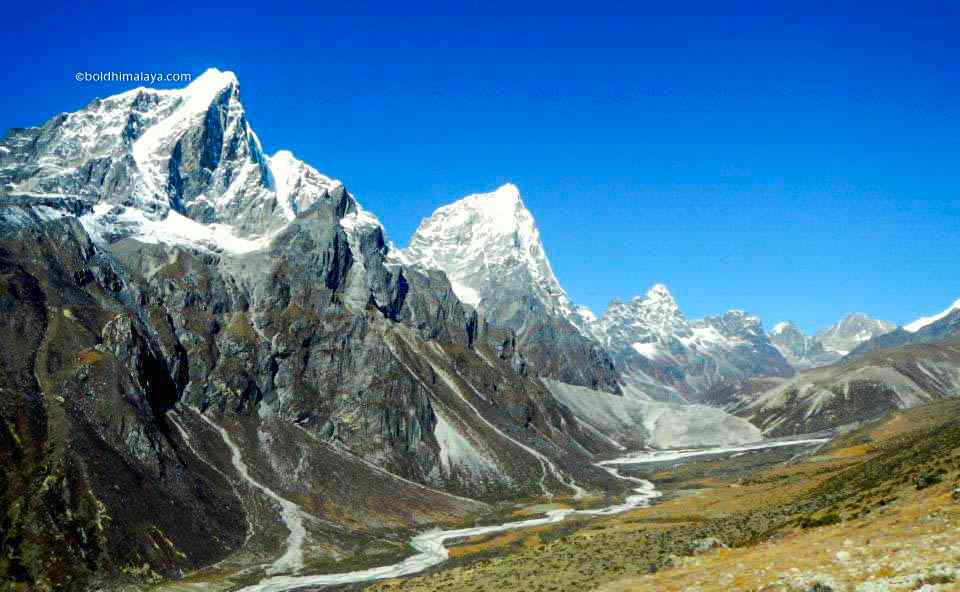
Everest three high pass trek offers incomparable mountain scenery. Moreover, you get an opportunity to explore the Khumbu region & the Everest Himalayan range which is itself a great achievement for high mountain lovers. Other than three high passes there are more highlights in this trek, Kala Patthar, Everest Base Camp Gokyo Ri, and lakes are major amazing places. Everest Three Pass Trek is above 5,000m and completes all of the Everest region including the Everest Base Camp and Gokyo Valley.    

Mount Everest Facts and Information

Click the link to get the necessary information about the history, weather, location, and geography of Mount Everest. You will learn about the details of the Everest region as well and you will be filled with fascination as you uncover the history behind the discovery of this place.

Everest Three Pass Trek Highlights

360-degree view of Mount Everest Himalaya region 

Trek to the world’s highest Mt. Everest base Camp

Nepal’s biggest Khumbu and longest Ngozumpa glacier

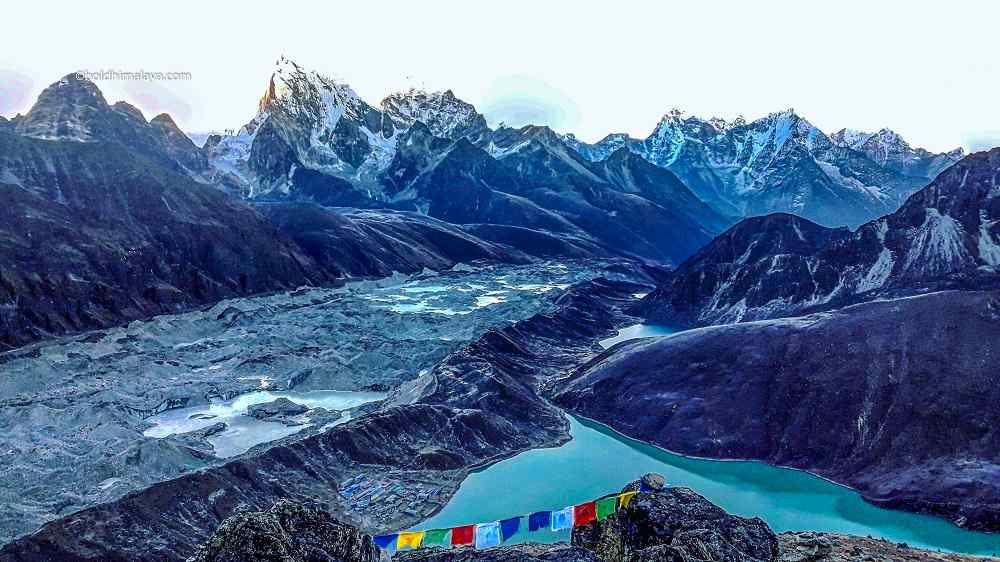
Explore the 5 glacial lakes of the Gokyo Valley

Cross three high passes above 5000m- Knogma La, Cho La, Renjo La pass

Passes through Sagarmatha National Park

Explore Sherpa villages, ancient monasteries

Majestic viewpoint, Kala Patthar, Gokyo Ri, and Chukkung Ri

Adventurous mountain flight to Luka

Everest Three Pass Trek Distance

The total distance covered during the Everest Base Camp Gokyo Cho La Pass trek is 130 kilometers. This renowned expedition provides adventurers with a mix of scenery and cultural interactions. From the Sherpa hub of Namche Bazaar to the village of Gokyo hikers journey through rugged mountain paths. You also go through high altitude passes such as the challenging Cho La and significant sites, like Everest Base Camp and Kala Patthar.

Attractions of Everest Three Pass Trek: 

Mountain flight, Sherpa Culture & lifestyle, an ancient monastery, High Himalaya’s glacier, Grand view of Himalaya above 7000m. Oligotrophic lakes 

Our
Everest Base Camp trek with three high passes begins with a thrilling flight.
It’s a scenic flight from Kathmandu to Lukla. We will hike through stunning
Namche, Tengboche, Dingboche, and other equally beautiful places. Iconic views of
the World’s highest Mt. Everest (8,848m), Fourth highest Lhotse (8,516m), fifth
highest Makalu (8,485m), sixth-highest Cho Oyu (8,210m), and other mountains are
offered during this trek.  

Talking
about the three high passes. From the top of the Renjo La pass, we will have
a panoramic view of Everest with many other mountain peaks and spectacular views of Gokyo Lake.  

Next,
you have the challenging steep climb to the icy path to the snowcapped summit
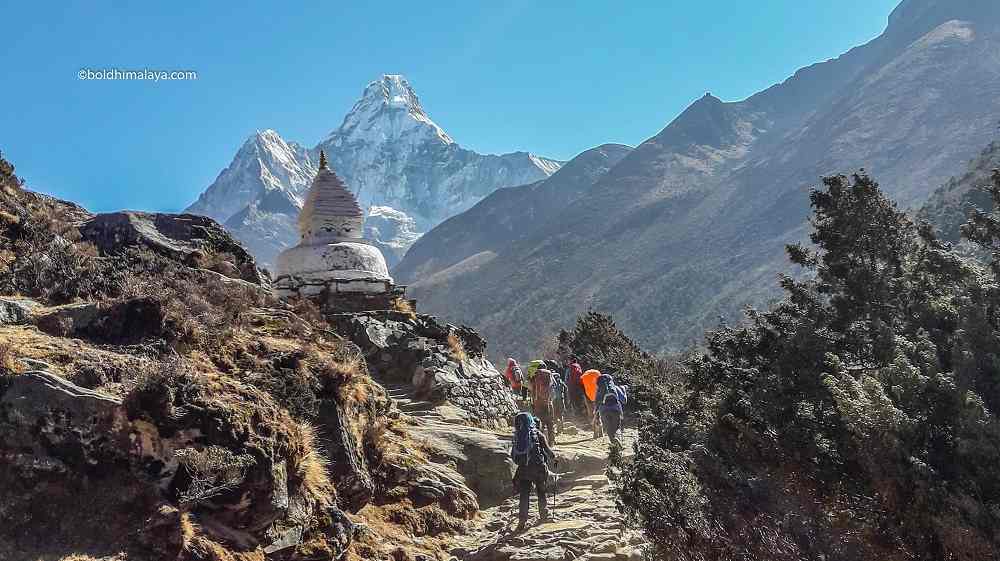
between Lobuche and Cholatse, Cho La Pass. From the pass, you get spectacular
views of Ama Dablam with several other mountain peaks.  

And,
Knogma La Pass is also described as a precarious struggle among skittering
stones. Cross a glacier & glacier-fed river and climb up to the highest
place of our whole Everest Base Camp with three high passes.   

Our
Everest Three High Pass trek starts from Lukla. From Lukla, we trek to Phakding,
then to Namche Bazaar. Here we will have an acclimatization day. You will visit
the Sherpa village of Khumjung and Kunde on this day. Moving further we stop at
Chhukung and have another acclimatization. For acclimatization, we will hike to
Island Peak Base Camp. Then we head toward the highest pass, Knogma La Pass, en route to Lobuche and Everest Base Camp.

Further, we take a long route to Cho
La through Dzongla and descend to Thagnak. Crossing the Ngozumpa Glacier we
head to Gokyo. And for another acclimatization, we climb to Gokyo Ri. Here you
have a superb view of Nepal’s longest glacier Cho Oyo and the Everest
range. And finally the steep ascent to the Renjo La pass, the third pass of three
high passes. Including the north face of Everest, an amazing view of the valley
and glacier with various high ridges is viewed from here. And the returning
trail descent to the Sherpa village Marulung where you face new landscapes.
Below Marulung, the trail continues to Thame and then back to Namche Bazaar.
Another adventurous flight from Lukla to Kathmandu.

EBC
with Three, High Pass Trek offers the best adventure in the Everest
Region. And you will have the best trip ever with the Bold Himalayas.

Read More

Itinerary

Your Journey, Step by Step

Day Day 01: Arrival at Kathmandu, Tribhuvan International Airport (1400m/4593ft)

Upon your arrival at Kathmandu, one of the representatives of Bold Himalayan will be waiting at the Airport terminal. After greetings, we will transfer you to your hotel. In the evening there will be a meeting with the guide in the office for detailed information about the trek. Overnight in Kathmandu


Day 2: Kathmandu to Lukla(2,845m/9,333ft) to Phakding(2,610m/8,562ft)

After early morning breakfast, we head toward the airport. We have an early morning flight to Lukla from Kathmandu. After about 30 mins thrilling flight we arrive at Tenzing Hillary Airport, Lukla. This airport is one of the most adventurous airstrips in the world with a single runway over a cliff. On reaching Lukla, we have lunch and meet porters


Now, we begin our short trek to
Phakding. After entering through Pasang Lhamu Sherpa Memorial gate, the trail
drops down to ChHeplung.  You will have an
amazing view of surging the Dudh Koshi river.


The trail then crosses suspension
bridges over Thado Khola and offering a beautiful view of Mt. Khumbila and we
reach Ghat. And the continued descending leads to Phakding. On the way, we pass
through stone walls decorated with mani, prayer wheels, and gompas. Overnight
stay at Phakding.  


Day 3: Phakding to Namche Bazaar Trekking (3,440 m/11,285ft)

We will have breakfast in Phakding and head toward the biggest treading hub of Khumbu called Namche Bazaar. The trail to Namche goes through uphill and downhill. We have many crossing over the Dudh Koshi river. The trail passes through several Sherpa villages- Rimijung, Zamfute and we arrive at Benkar. Here you have a magnificent view of Mt. Thamserku. Then we cross more bridges and reach Chhamuwa. Here we register your TIMS card and climbing through an enchanting forest of rhododendron and fir. And we finally reach the entrance of Sagarmatha National Park at Monjo.


After submitting the TIMS card and
national park entry card we head to Namche. Then passing through Tenzing-
Hillary suspension bridge over the Dudh Koshi river in Jorsale village, the
trek concludes at Namche. Overnight at Namche.  


Day 4: Acclimatization and Exploration day ( Hike to Everest View Hotel)

Namche, the gateway of the Everest Region is the largest tourist hub in the Everest Region. As high altitude trekking needs at least one acclimatization day and our EBC trek with Gokyo Cho la Pass is the high altitude trek. So, Namche is the best place for our first acclimatization. Today we will let our body acclimatize to the high altitude by hiking to several places near Namche


First, we will hike up to the
Everest View Hotel to enjoy the beautiful views of the Himalayan vista. It is
one of the world’s highest hotels, from here we have the panoramic view of Mt.
Everest, Mt Khumbila, Mt. Thamserku, Lhotse, and Ama Dablam. After a cup of tea
or coffee in the hotel, we hike back to Namche.


On our way back to Namche, we will
explore the Khumjung Monastery and Hillary school. Further, hike to Namche
lands at Syanboche airstrip on the foot. This airstrip is only used by
helicopter, as it is a non-commercial airport with an unpaved narrow runway.
We have the breathtaking charming scenery of Namche village from the runway.


Following the gravel zigzag path
through Zarok, to Namche. Namche Bazaar is the major attraction of Everest Base
Camp. The market on a Saturday is a major attraction of Namche. Overnight stay
in Namche.  


Day 5: Namche to Tengboche Trekking (3,860m/12,633ft)

We will continue our trek to Tengboche after breakfast. From Namche, we ascend uphill and pass through dense juniper forest for a few hours to reach Sanasa. Then following the right route trail offering the glorious view of towering peaks Ama Dablam, we descend through juniper forest to the villages; Lawichasa and Tashinga. And on reaching Phunki Thanga we ascend towards Tengboche village


Tengboche is known as one of the
most beautiful places in the Everest Region. It is home to the largest
monastery in the Everest region. This monastery provides panoramic views of the
highest mountains on the earth including Mt. Everest, Ama Dablam, Nuptse,
Thamserku, and Lhotse. Overnight stay in Tengboche.  


Day 6: Tengboche to Dingboche Trekking (4,410m/14,467ft)

Our trek starts with the downhill walking from Tengboche. Then we pass through a lush forest filled with birch, rhododendron, and conifers tree. Continue trekking with the views of Everest, Lhotse, and Ama Dablam, the trail dips down to Debuche. The tail from Debuche traces the junction of Pangboche. You pass through the dense forest and suspension bridges over the Imja Khola. With the closer view of Ama Dablam, we come across the flat trail ahead of Orso. From Orso, we walk uphill along the Imja river and we arrive at Dingboche. The trail offers a pristine view of the Himalayas. Dingboche is a beautiful windy settlement overlooked by Chortens and prayer flags. Overnight at Dingboche


Day 7: Dingboche to Chhukung (4,730m/15,518ft) 3-4 hrs trek.

After breakfast, we follow the trail through stone-walled fields and Imja Khola. And we enter the glacier moraines amidst towering Himalayas. We continue to Bibre, yak rancher place. From here, the fantastic Ama Dablam and the Amphu Labsa mountain are directly across the valley. After half an hour walk following the moraine glacier offering the magnificent glimpse of Island peak, glacier, and massive snowy mountain, we reach Chhukung peak. Chhukung peaks offer the marvelous view of Lhotse, Ama Dablam, Makalu, Baruntse. And the short hike to Chhukung Peak drops to Chhukung village. Chhukung village lies near the base of Island Peak is a popular trekking peak for first-time climbers. Overnight stay in Chhukung


Day 8: Rest, Explore and acclimatization day at Chhukung

We will have another acclimatization day in Chhukung after the long, tiring, and challenging trek. During this acclimatization, we have a short hike to Island Peak Base Camp. It arises subline feelings on trekkers. The upper Imja valley hiking offers an amazing view of Ama Dablam and Lhotse along with the bloated water of ImjaTsho. Then walk along the ChokarmaTsho below Lhotse Glacier. The trail follows the substitute route of Lhotse moraine before the Island peak base camp. This trail from Island Peak Base Camp traces the before trample route & returns to Chhukung and has proper rest. Overnight at Chhukung


Day 9: Chhukung to Knogma La (5,535m/18,158ft) to Lobuche(4,940m/16,206ft) Trekking

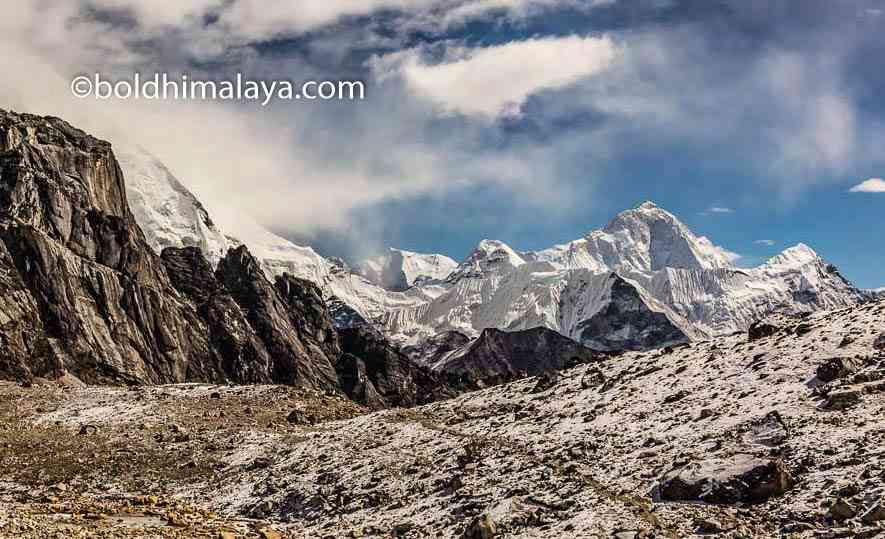
Today we trek is the first real challenge of the Three Passes as we hike to the highest part of the entire trek. We have two options, we can either take a trail over a hill which is to the northwest of Chhukung over the Nuptse Glacier. Or we can walk back to Bibre and trek on the trail above the Niyang Khola. We will follow the trail alongside NiyangKhola on the left. The icy trail wiggles through a small lake then ascend to a wide bowl and frozen lake. Finally, reaches at Knogma La Pass, our first pass out of three passes. From the top, we will have a fantastic view of Cholatse, Pokalde, Nuptse, Lhotse, Makalu and Ama Dablam


The trail of the trek then descends
from the High camp above Knogma la Pass. It traces the moraine glacier path of
the Khumbu to Lobuche. It is on the foot of the Khumbu glacier. Overnight stay in
Lobuche.


Day 10: Lobuche to Gorakshep(5,164m/16,942ft) to Everest Base Camp (5,364m/17,600ft) to Gorakshep

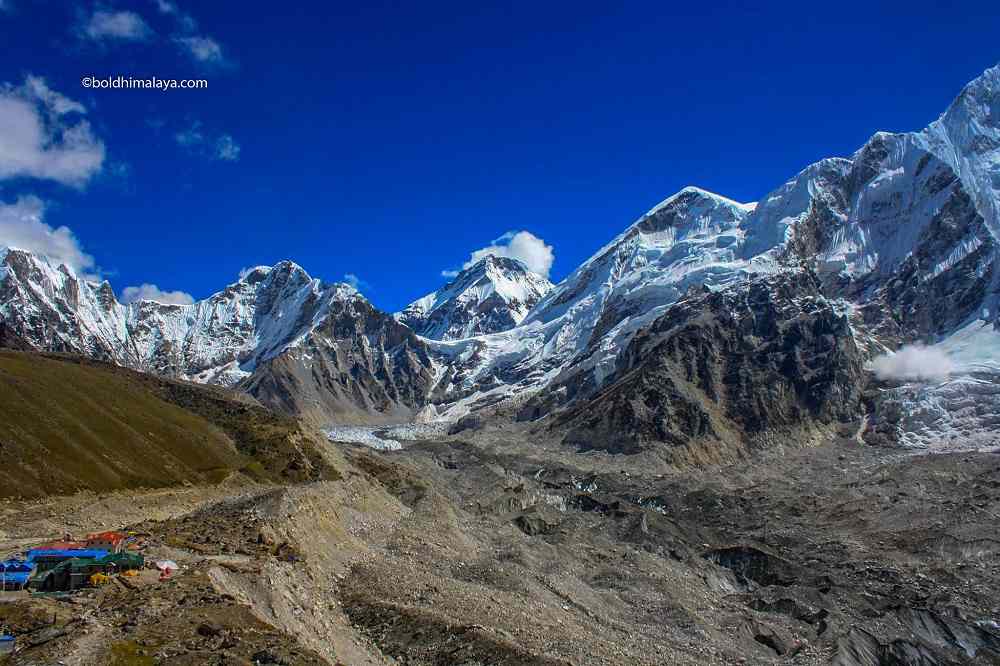
After crossing one of the highest passes, we trace the trail to Everest Base Camp. The trail from Lobuche passes through narrow mountain gaps, glacial moraine alongside the world’s highest glacier, Khumbu glacier. Then walking for about 3 hours through a rocky path, we reach the last human settlement, Gorakshep. Gorakshep is the junction from where the path separates to Kalapatthar and EBC


And from Gorakshep, we will follow
the trail full of sandpit and boulders to the Everest Base Camp. After 2 hours
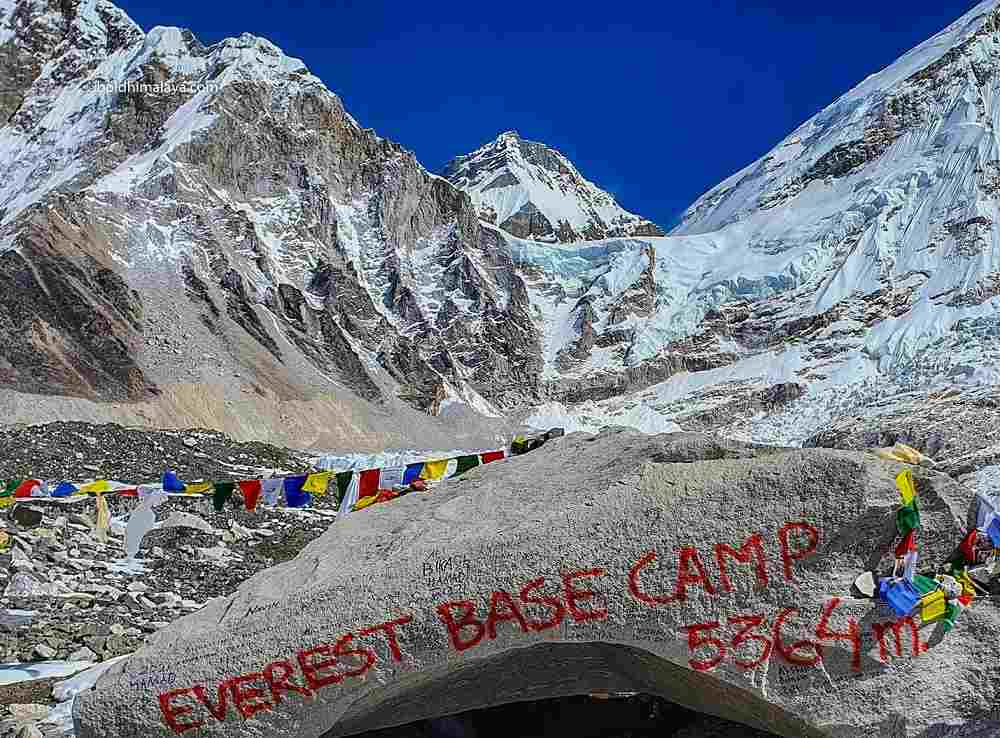
demanding trek from Gorakshep, we reach our today destination, Everest Base Camp.
On reaching EBC you will forget all your pain and feel the best moment of your
life. From the base camp of the world’s highest mountain, you will have an
amazing view of Khumbu Icefall, sparkling view of mountain peaks. And after
observing the 360-degree view of Himalayan peaks and enjoying the best time in
the most awaited destination of our EBC with three high pass treks, we trek back
to Gorakshep. Overnight at Gorakshep. 


Day 11: : Gorakshep to Kalapatthar(5,545m/18,192ft) - Gorakshep to Dzongla (4,830m/15,850ft)Trekking

Today we will have an early morning about 3 hours hike from Gorakshep to Kalapatthar summit. Early morning hike gives a chance to catch a remarkable view of the light of the sun shining on Mt. Everest. Kala Patthar is the iconic viewpoint of Everest, you can have a close view of Everest from here. Along the highest mountain, Everest this summit offers the dazzling view of Lingtren (6,749m), Khumbutse (6,636m), Nuptse (7,861m), Pumori (7,161m). After capturing the Himalayan range in our soul, we descend back to Gorakshep


On reaching Gorakshep we will have
breakfast. After breakfast, we descend the same route toward the Sherpa
village, Lobuche. From Lobuche, the path ascends the ridge. And with the view
of beautiful Ama Dablam, Kangtega, Thamserku, the trail descends. Then the
trail ascends and leads us to today’s stop, Dzongla. On reaching Dzongla
village, we will have a sparkling North view of Cholatse peak. Overnight at
Dzongla. 


Day 12: Dzongla to Cho La Pass (5,420m/17,781ft) - Thagnak(4,680m/15,354ft) to Gokyo (4,790m/15,715ft)Trekking

Today’s route from Dzongla to Gokyo will be challenging as we will pass through another high pass of our EBC with 3 High Pass Trek. After breakfast in Dzongla, we follow the trail that ascends through the icy path. With the view of Ama Dablam, Cholatse and several streams the trail ascends down the basin. From here it again rises to the ridge before Chola Pass. Climbing the slippery icy path, we make it to the top of the pass. It is marked by prayer flags and cairns. From the top of we will have the breathtaking scenery of majestic peaks in all directions


Then the gradual drop down through
the narrow gorge and take us to the beautiful village, Thagnak. We will have
lunch in Thagnak and head toward Gokyo.


From Thagnak, we ascend through the
moraine glacier below Ngo Zumba Glacier. Ngozumpa Glacier is the longest
glacier in Nepal. You will have the vista of tempting scared lakes-
LongpogaTsho and Taujung fascinate to falsify ahead. And we see the second
Gokyo lake is on a series of six lakes as we reach the other side of the
glacier. Finally, a short walk takes us to the third Gokyo lake, and on the edge
of this lake stands the Gokyo village. Overnight stay in Gokyo village. 


Day 13: Acclimatization and exploration day at Gokyo Lake

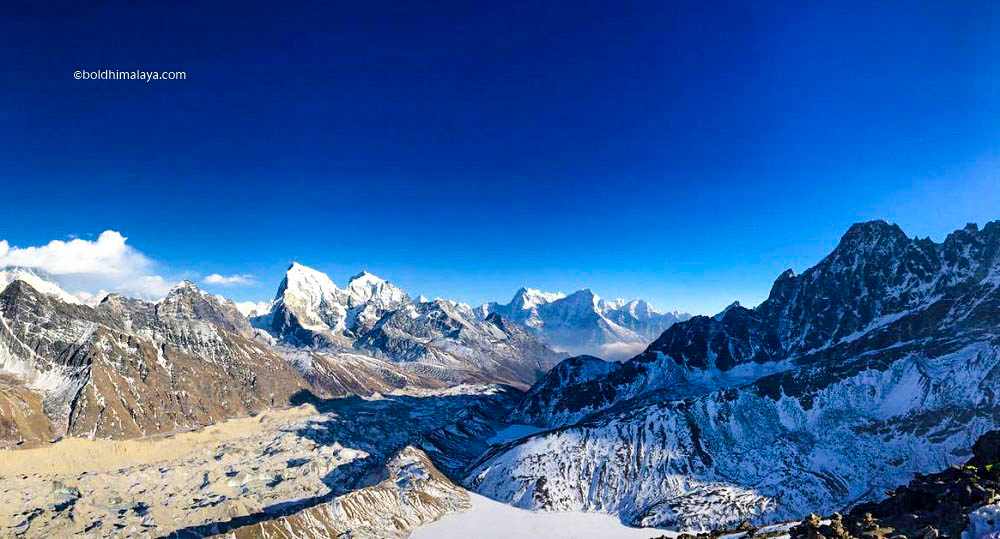
Today we will have another acclimatization day in Gokyo to avoid AMS while treading at a higher elevation. For acclimatization, we will climb Gokyo Ri. And enjoy views of the incredible mountain vista. Gokyo Ri is another majestic viewpoint that offers the amazing vista of Mt. Everest along with various peaks and serene landscape. Furthermore, this peak is a vantage point that offers the artistic view of Cho Oyu, Lhotse, Cholatse, Taboche, moraine, Ngozumpa glacier. After enjoying the enchanting scenery, we drop back to Gokyo for lunch


We can also tour the fourth and
fifth Gokyo lake today. There is ‘Scoundrel’s Viewpoint’ located at the edge of
the 5th lake. The view of Cho Oyu, Gyachung Kang, Mt. Everest, Lhotse, Nuptse
and Makalu mountain with the huge Ngozumpa Glacier is amazing. Overnight stay
in Gokyo. 


Day 14: Gokyo to Renjo La (5,345m/17532ft) to Marulung (4,210m/13,810ft)Trekking

Another challenging day as we go over Renjo La, the last three-pass of our EBC with three high passes trek. As it will be a long day trek we will start the day early in the morning. Following the trail alongside Dudh Pokhari, we will walk for two hours. We descend toward the Renjo La pass. With the extravagant views of the Himalayan, Rolwaling ranges, and others, a zigzag path takes us to Renjo La. The views from the Renjo La pass are much like that from Gokyo RI. We also get the outstanding views of Mt. Everest and the third Gokyo Lake and Gokyo Village below the gray smear of the Ngozumpa Glacier are extra


Our trail from the pass winds down
a stone staircase. Then moving over loose debris we reach the south bank of the
Anglaadumba Tsho Lake. Now we descend the icy trail, with the view of Relama
Tsho and Renjo Lake. Then we walk down a narrow valley clogged with giant
boulders to Lunde. And finally about an hour walk from Lumde takes us to
Marulung. It is on the east bank of the Bhote Koshi River. Overnight stay at
Marulung.


Day 15: Marulung (4,210m/13,810ft) to Namche(3,440m/11,285ft)Trekking

After breakfast we descent from Marulung to Thame. Follow a traditional route used for centuries by the Tibetan traders. Then the trail crosses suspension bridges over Bhote Koshi, we descend to Taranga. Following the lush green valley of Langmuche Khola to Thambuteng village, where Kyarkerok Gompa lies. It is a 350-year-old gompa. Then we walk the zigzag trail to Thame. Now we will walk through the moraine of Thame then cross a suspension bridge and reach Samade. From Samade we descend to Phurtse village. Finally, trekking many gompas, colorful intertwined prayer flags, Mani wheels, Chortens we arrive at Namche. Overnight at Namche


Day 16: Namche to Lukla Trekking(2,845m/9,333ft)

From Namche, we trek back to Lukla which will be our last day of the hike. We will descend and cross several suspension bridges. Then further trekking to Dudh Koshi river takes us to Phakding


From Phakding we will have a
gradual walk to Cheplung, then we ascend to Lukla, with prayer flags, Chortens,
Mani walls and miniature Gompas lined throughout the village. Overnight at
Luka. 


Day 17: Lukla to Kathmandu Flight (1400m/4593ft)

On the last day of our trek, we will have an early breakfast in Lukla and fly to Kathmandu. After about 30 mins thrilling scenic flight we arrive at Kathmandu. One of our representatives will be at the airport and you will be transferred to the hotel. In the evening you will enjoy a cultural dinner with the Bold Himalayan team. 


Day 18: Final Departure

A representative from Bold Himalayas drops you at the airport before 3 hours of your departing time. You can join for another thrilling adventure or trip with Bold Himalaya. We can right away arrange your awesome trip


Want to customize your trip?

We ensure every trip meets your expectations — customize your itinerary anytime to match your travel style and preferences.

Customize your trip
CTA Image

    We'll contact you within 24 hours with personalized recommendations

    Inclusions

    What’s Covered in Your Adventure

    Includes
    • All airport pick up and departure and all ground transportation during trips.

      Domestic Flight according to itinerary Kathmandu- Lukla- Kathmandu Domestic Flight 2 way flight ticket

      Hotel in Kathmandu three star category in twin sharing bed with breakfast basis and standard Guesthouse/ Trekking Lodge

      All Breakfast in t Lunch, Dinner in trekking

      Whole accommodations during trips 

      Some seasonal fruit items 

      First aid medicine items

      Necessary staff, guide & porters including all their (Food Accommodation, Salary, and Insurance)

      One special cultural show and farewell dinner program

      Our government tax & official expenses

      Sagarmatha National Park entrance fee, Pasang Lhamu Rular Municipality Entrance fee, TIMS

      Sleeping Bag, Down Jacket (If you Needed Return after Trekking)

      Duffle Bag, T-shirt, and Trip certificate 

      One cultural show and dinner program

      Our service charge and government taxes

    • Extra Breakfast, Lunch in the Kathmandu

      Dessert & Bar Bills

      Your international air ticket & travel insurance

      Tips for the trekking crew members 

    Excludes
    • All airport pick up and departure and all ground transportation during trips.

      Domestic Flight according to itinerary Kathmandu- Lukla- Kathmandu Domestic Flight 2 way flight ticket

      Hotel in Kathmandu three star category in twin sharing bed with breakfast basis and standard Guesthouse/ Trekking Lodge

      All Breakfast in t Lunch, Dinner in trekking

      Whole accommodations during trips 

      Some seasonal fruit items 

      First aid medicine items

      Necessary staff, guide & porters including all their (Food Accommodation, Salary, and Insurance)

      One special cultural show and farewell dinner program

      Our government tax & official expenses

      Sagarmatha National Park entrance fee, Pasang Lhamu Rular Municipality Entrance fee, TIMS

      Sleeping Bag, Down Jacket (If you Needed Return after Trekking)

      Duffle Bag, T-shirt, and Trip certificate 

      One cultural show and dinner program

      Our service charge and government taxes

    • Extra Breakfast, Lunch in the Kathmandu

      Dessert & Bar Bills

      Your international air ticket & travel insurance

      Tips for the trekking crew members 

    Availability

    Add your travel dates for booking

    Clear Dates

    Didn't find suitable date? Customize your trip for your time and preference.

    Good to Know

    Your Journey, Step by Step

    Trip Info

    Everest Three Pass Trek Guide:


    Things to Know before going trekking in the Himalayas of Nepal

    check out the above link to get comprehensive details about preparations and information that you will need before embarking on this adventure.


    Best Time to Do Everest Three Pass Trek

    Spring (March April and May) and Autumn ( September October and November) are the best seasons for the Everest Three Pass Trek. The Three Pas trekking trails are open for the whole year although the weather makes it difficult to complete trekking.  winter (December, January, and February) temperature gets down, and also the possibility of heavy snow all, in the rainy season temperature will be good but rain makes it difficult to finish the trekking.


    Everest Three high pass trek difficulty

    The Everest Three Passes Trek is considered one of the most challenging treks in the Everest region of Nepal. It involves crossing three high mountain passes: Kongma La Pass (5,535m/18,159ft), Cho La Pass (5,420m/17,782ft), and Renjo La Pass (5,340m/17,520ft). The difficulty level of this trek is generally rated as strenuous or challenging due to the high altitude, steep ascents and descents, unpredictable weather conditions, and the need for good physical fitness and acclimatization.

    Trekkers should be prepared for long days of hiking, varying weather conditions including cold temperatures and possible snowfall, and the effects of high altitude such as altitude sickness. Proper acclimatization, physical fitness, and prior trekking experience in high-altitude environments are highly recommended for those attempting the Everest Three Passes Trek. Additionally, trekking with an experienced guide and/or joining a guided group can enhance safety and enjoyment during the trek.


    Preparations for Everest Three High Pass Trek

    Be Physically Fit:

    Focus on improving your stamina, muscle strength, and overall cardiovascular health. Make sure to include activities, like walking, hiking, cycling, running, and climbing stairs in your exercise routine. It’s also beneficial to do strength training exercises specifically targeting your leg muscles.


    Essential Gear;

    It’s important to invest in quality hiking gear such as hiking boots, moisture-wicking clothes, a jacket for insulation, waterproof outerwear, a comfortable backpack, trekking poles a sleeping bag suitable for cold weather conditions, and a sturdy tent if you plan to camp out. Don’t forget to pack essentials, like a headlamp, sunglasses, sunscreen, and a first aid kit.


    Training Hikes

    Before heading out on your trek make sure to go on a practice hike gradually increasing the distance and elevation you cover. It’s helpful to carry a backpack with some weight in it to get used to the conditions you’ll face while trekking.


    Preparing Mentally;

    Get yourself mentally prepared for the challenges of trekking at altitudes. Be ready for weather conditions, days of hiking, and the possibility of feeling unwell due, to altitude.


    Health Check-up;

    Make sure to see a doctor before embarking on your high-altitude trek. Get any vaccinations and medications that can help prevent altitude sickness.


    Preventive measures for Altitude sickness

    Concerns, about altitude play a role in the Everest Three Passes trek especially considering the heights involved. It is important to acclimatize by spending a day in Namche Bazaar or Dingboche before tackling the passes allowing your body to adjust slowly to the high altitudes. Staying hydrated is key, to preventing dehydration so it’s recommended to drink plenty of fluids while steering clear of alcohol and caffeine. The ascent should be gradual following the planned ascent and descent patterns outlined in the trek itinerary. Being able to recognize symptoms of altitude sickness like headaches, nausea, and fatigue is essential. If symptoms worsen immediate descent and medical attention are vital. Some trekkers may choose to take altitude sickness medication. It’s best to consult with a healthcare professional.

    For more detailed guidance on identifying and preventing Altitude sickness click on the highlighted link. You will learn about different types of Altitude sickness, their severity, preventive measures and necessary medications to fully be prepared for this problem.


    Drinking water facility 

    Clean drinking water is the most important thing while you are trekking, 3 to 4 liters of water you have to drink in a day depending on your physical activeness and body structure.  In the Three-pass trek, there are numerous options for drinking water Mineral water, boiled water, and safe drinking water. buying mineral water will be expensive in high mountains and it generates plastic pollution, so we suggest to all our trekkers  there are many water resources that you can easily refile from tab or stream and make it clean and safe to drink by filtration such as Lifestraw or water purification tablets


    Weight Limits for Porter and Flight 

    10 baggage and 5 kg of hand-carry are allowed for the flight to Lukla. If you have a heavier weight than 15 kg you have to pay extra at the airport. For the porter, there are weight limits for carrying a backpack, one porter carries two guests’ backpacks up to 20kg only. If you have big, heavier baggage then let us know we manage extra porters to bring your backpack with you.


    ATM and Money Exchange 

    There are few ATMs and Money Exchange up to Namche Bazar only. After Namche Bazar no ATMs and money exchanges so we request all our guests to carry enough cash for extra expenses. Extra expenses such as drinks, souvenirs, snacks, desserts, etc.


    Internet and Mobile Network in Three Pass Trekking Route

    Nowadays, the Internet and mobile networks play a vital role in connecting with friends and family wherever you travel. Most of the tea houses (trekking lodges) provide internet Wi-Fi facilities Most of the trekking providers in the pass trek area areas three-pass routes are covered by the local mobile network NTC(Nepal Telecom) and NCELL.


    Electricity facility in Everest Three Pass Trek

    Electricity is available throughout Everest Three Pass Trek, At lower altitudes like Lukla, Phakding, and Namche have a good hydroelectricity facility, and at higher altitudes have solar electricity where you can charge your electric devices. however all the rooms don’t have power sockets, so you have to charge in common charging area near the dining or reception. Your power socket may not fit in every area so we suggest trekkers bring travel adaptors that have different fitting plugs.


    Guides and Porters

    During the Everest Base Camp Trek, trekkers are accompanied by experienced and knowledgeable guides and dedicated porters who play a vital role in ensuring their safety, comfort, and enjoyment throughout the journey.

    Our trek guides are local experts, many from the Sherpa community, with in-depth knowledge of the region’s culture and trails. Fluent in English, they provide valuable insights into the surroundings and ensure proper acclimatization to prevent altitude-related issues.

    The porters carry the bulk of the equipment and supplies, allowing trekkers to walk with only a daypack. We prioritize their welfare and adhere to responsible Porter policies. Both our guides and porters are committed to providing excellent service and support, fostering a warm and friendly atmosphere for cultural exchange, and creating a sense of camaraderie among trekkers and the trekking team.


    Gears and Cloths for Everest Three Pass Trek (Packing List for  Everest Three Pass Trek)

    Clothing items–  Caps/Hat, Warm hats (Banie), jackets(Down, fleece jacket, Water Proof), shirts, Thermal Set( Base Layer), t-shirts, trousers/Hiking Pants (warm & waterproof), Neck Gaiter, Gloves (Inner & Insulated), Towel, Undergarments

    Bag packs and Bags – Day Pack, at least you have a 45-50 liters backpack or Duffel bag that can hold your necessary items

    Footwear– Trekking Shoes, sandals, sucks (Warm) at list 4 pairs, Gaiters (for Winter)

    Sleeping Bags– sleeping bags at least -15 to -20 for winter, Sleeping bag liner

    Electronics items– Camera, Headlamp or touche with batteries, portable charger( Power Bank)

    Accessories – Eye wears (Sun Glass), Trekking Poles, Water Bottle (Hydration Bladder), Crampons/ microspikes (For Winter only)

    Mischillinious–  Safety and First aid items & medicine (Including Oximeter & Thermometer), Bag cover/pack covers, Money Belt, hand sanitizer, Sun cream, Toothbrush, toothcream, Shop, Shampoo, Toilet paper, Booties(for winter) Mitten( For winter) Cards, Shanks, chocolates, Money, Passport, Travel insurance


    Necessary Documents

    TIMS Card (Trekkers’ Information Management System): The TIMS card is a mandatory permit for all trekkers in Nepal. It helps track trekkers and ensures their safety during the trek.


    Sagarmatha National Park Permit: The Sagarmatha National Park Permit is required for entering the Everest region and trekking to Everest Base Camp. This permit allows you to explore the protected area and helps preserve its natural beauty. We will hand over these documents to you before you embark on this trip.


    Valid Passport: A valid passport is essential for all travelers entering Nepal. Make sure your passport has at least six months of validity beyond your planned travel dates.


    Nepal Visa: You can obtain a tourist visa on arrival at the Tribhuvan International Airport in Kathmandu.


    Travel Insurance Requirement

    Travel insurance is a must-have, for those planning to embark on the Everest Three Pass Trek as it provides coverage for unexpected situations. Insurance offers security in emergencies like altitude sickness or injuries trip cancellations due to flight delays or personal issues. It also includes protection for stolen items, emergency evacuation and rescue expenses in mountainous areas and any legal responsibilities that may arise during the trek. With travel insurance in place hikers can tackle the challenges of the Everest region confidently knowing they are ready, for any circumstance and can fully immerse themselves in the breathtaking beauty and thrills of the Himalayas.


    Tipping in Nepal

    The tipping custom is ingrained in the trekking culture of Nepal and is used to express gratitude for the porters’ and guides’ tireless efforts. It is a common habit and is seen as a sign of gratitude for the assistance given during the walk. Trekking guides are essential for guiding hikers over difficult terrain, ensuring their safety, and offering insightful information about the local way of life and environment. An average tip for porters is between 10% and 15% of the entire cost of the hike. Trekkers may decide to tip more generously as a sign of appreciation if the guide has gone above and above in providing great service or guaranteeing the group’s safety.


    How do I book the Everest Three Pass Trek?

    Feel free to contact our team of travel professionals through our website, email or phone. We’ll assist you every step of the way address any inquiries you might have and assist in selecting the itinerary that matches your preferences and timetable.


    Three passes trek vs Everest base camp

    Everest Three-Pass Trek

    Everest Base Camp Trek

    Includes crossing the Renjo La, Cho La, and Kongma La Passes.


     Includes Gorakshep and Everest Base Camp.


    Along the way, you’ll explore the Gokyo Valley, Chhukung Valley, Renjo Valley, and Kala Patthar.


    Excludes Gokyo Valley while encompassing Kala Patthar.


    The total distance covered is 166 kilometers


    The total distance covered is 130 kilometers


    14 to 18 days to complete12 to 14 days to complete


    One of the lesser-known treks


    One of the most popular, in Nepal.


    This route is recommended for those with some hiking experience due to its demanding nature.


    Does not necessitate any specific skills.


    Similar High Pass Treks in Nepal

    Nepal is home to eight of the world’s 14 highest peaks. So you will have many options available if you want to trek in the high passes of these high mountains. Click the highlighted link and check out the best high-pass treks available in Nepal.

    FAQs

    Your Questions, Answered

    How difficult is Everest Three Pass Trek?

    Everest Three Pass Trek is considered one of the most strenuous trekking in the world because this trek has to cross three high passes which are above 5000 meters. long trek crossing the high passes via icy glaciers makes it strenuous for most trekkers.

    How long is Everest Three Pass Trek?

    Everest Three-Pass Trek takes 18 to 22 days to complete. The total trekking days depend on space for acclimatization and the trekker’s speed however we suggest to all trekkers listen to your body and go slowly with proper acclimatization.

    What are the three passes of Everest Three Pass Trek?

    In Everest Three Pass Trek, there are main three high passes Kongma La(5550m/18209ft), Cho La(5420m/17282ft), and Renjo La 5360m/17560ft) which all are above five thousand meters.

    How much cost does it take for Everest Three Pass Trek

    Generally, the cost of Everest Three Pass Trek is USD 2000 including a two-way flight to Kathmandu accommodation with breakfast basis, Kathmandu- Lukla-Kathmandu, guide, porter, food, accommodation, national park, and municipality permits. however, we are offering this trek with a huge discount which is USD 1600 only with an all-inclusive package. That is the cost of Everest Three Pass Trek per day is USD90 only.

    Does any technical training required for Everest Three Pass Trek?

    There is no technical or mountaineering training needed for Everest Three Pass Trek however basic physical fitness and mental preparation are needed. Basic physical fitness means trekkers should be able to walk 4 to 6 hours per day even at high altitudes. We suggest to all our trekkers to prepare by doing aerobic training, running, gym, and yoga for the one month before going trek.

    Do I need oxygen for Everest Three Pass Trek?

    Of course, trekking at a high altitude the air will be thinner and oxygen level gets down although no oxygen supplementary is needed for Everest Three Pass Trek. Drinking penalty of water, soups, and breathing yoga can increase the level of  O2 level in your body

    How many days of acclimatization is essential for Everest Three Pass Trek?

    While getting high altitude two days of acclimatization at Namche Bazar and Chhukung is enough for regular trekkers. If you need more acclimatization days we can customize the trip to your needs.

    How much advance payment do I pay while booking the trek?

    To confirm your booking trip the 20% down payment is required to make advance as per company policy. As Nepal most liked tourist destination and is always overbooked in the mountain region we encourage you to make an advance payment on time to secure your reservations.

    Is Three Pass Trekking in Everest worth it?

    Everest Three Pass Trek is totally worth it trek has main three passes all are above 5000m which is itself a great achievement for a Hiking lover. Everest region is home to the world’s highest mountain, high peaks above 7000m, and abundant in spectacular scenery. Walking through the Himalayas’ icy glaciers, stunning views of high mountains, and oligotrophic lakes, makes one of the greatest adventure experiences of a lifetime.

    Reviews

    What Our Travelers Say

    Based on 0 ratings

    0

    Add a Review

    View OurSimilar Packages

    Discover our top tours, loved by thousands of travelers annually. Choose the adventure that inspires you and embark on a journey tailored to your desires.

    View All Packages
    Star Star Star Star Star

    Upper Dolpo Jomsom Trek via Upper Dolpo Region

    Nepal
    25.0 Days
    Highlight ü Phoksundo Lake ü   Bon culture at Ringmo, the village just above...
    Tsum Valley Trek

    Save 23%

    Star Star Star Star Star

    Tsum Valley Trek

    Nepal
    17.0 Days
    Tsum Valley is a sacred Himalayan pilgrimage valley that is situated...
    Star Star Star Star Star

    Shey Phoksundo Lake Trek Via Upper Dolpo

    Nepal
    24.0 Days
    Highligh Graze over the turquoise waters of Lake Phoksundo One of...
    Star Star Star Star Star

    Sikles Trek | Sikles Village Trek

    Nepal
    10.0 Days
    Sikles Trek Highlights  ü   Scenic drive from and to Pokhara ü   Second largest Gurung village ü   Walking...
    Star Star Star Star Star

    Phulchowki Hike

    Nepal
    1.0 Days
    Located in Nepal’s Kathmandu Valley, Phulchowki is a popular destination for...

    $1600.0

    Per Person

    Write a Review

    Write your review to share your experiences and let others know about your trip.

    Rate your Experiences

    Drag and drop or to add gallery

    Share your feedback

    Help others by sharing your journey with us

    Customize Your Trip with Bold Himalaya

      Plan a trip

      Explore the recognitions we've earned and the legal foundations we've built.

      What is the destination of choice? [Select Multiple]

      Explore the recognitions we've earned and the legal foundations we've built.

      Flexible Flexible
      Nepal Nepal
      India India
      Bhutan Bhutan
      China China
      Maldives Maldives
      Indonesia Indonesia
      Peru Peru
      What activities are you interested in?

      Explore the recognitions we've earned and the legal foundations we've built.

      Flexible
      Trekking/Hiking
      Tours sightseen
      Peak Climbing
      Wildlife & Nature
      Biking & Cycling
      Water Sports
      Day Tours
      Helicopter Tours
      Spiritual Religious
      Hunting
      Travel Date & Duration

      Explore the recognitions we've earned and the legal foundations we've built.

      Contact Information

      Explore the recognitions we've earned and the legal foundations we've built.

      Thank you for Planning your Trip.

      You will receive E-mail about the packages and we will be contacting you shortly

      Explore Packages
      Bookmark Added Successfully
      You can always view your bookmarks on the profile page.
      Error
      You can always view your bookmarks on the profile page.
      Warning
      You can always view your bookmarks on the profile page.
      Information
      You can always view your bookmarks on the profile page.
      invoice
      Bold Himalaya Kuleswor-13, Kathmandu, Nepal https://www.boldhimalaya.com +977-9862964046
      BILL TO John Michael [email protected] +977-9819947321 Triyuga, Udayapur, Koshi Province, Nepal
      • Invoice #156
      • Created 15/11/2024
      • Due 28/11/2024
      • Booking Number #156
      • Booking Status Processing
      • Payment Method Offline Payment
      • Tour Name Everest Basecamp Trek
      • Address Indonesia
      • Departure Date 12 Nov. 2024
      • Duration 4 Days
      • Adult 2
      Pricing
      • Adult: 2 * $700 $1,400
      • Service Tax $0
      • Discount - $100
      • Invoice #156
      • Created 15/11/2024
      • Due 28/11/2024